
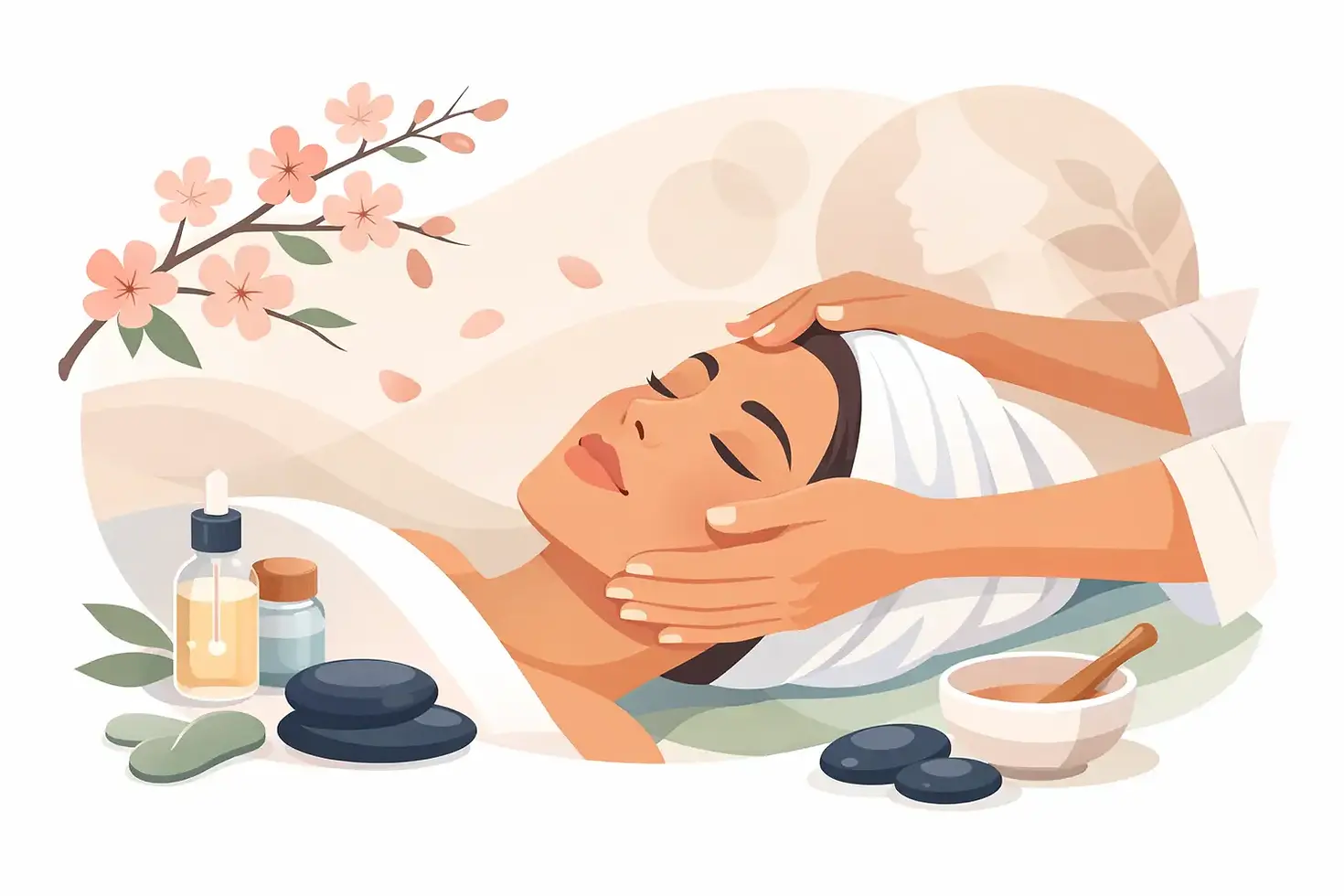
A Practical Guide to Kobido Facial Massage

A guide to Kobido facial massage begins with a useful distinction: this is not simply a face massage with a few strokes of moisturiser. Kobido is a detailed Japanese-inspired treatment using changing rhythms, light pressure and precise hand movements across the face, scalp, neck and décolletage. For people whose jaw feels held, whose brow rarely softens or whose nervous system has been running on empty, that focused touch can offer a rare invitation to pause.
Kobido is often described as a natural facial treatment because it works with the skin and underlying soft tissues rather than relying on needles or devices. Yet its value is not limited to appearance. A well-delivered session can feel deeply settling, particularly when facial tension is part of a wider pattern of stress held through the shoulders, jaw, breath and scalp.
What is Kobido facial massage?
Kobido, meaning “ancient way of beauty”, has roots in Japanese manual facial techniques. Contemporary Kobido-inspired treatments vary between practitioners, but they commonly combine flowing strokes with more brisk, rhythmic movements, gentle kneading, pressure-point work and lifting-style techniques. The pace changes deliberately. Slow strokes can prepare the tissues and calm the senses, while faster sequences bring a feeling of freshness and stimulation.
The treatment usually includes the face, neck, shoulders and scalp. This matters because the face does not carry stress in isolation. A tight neck can contribute to a sense of heaviness around the jaw and forehead; habitual teeth clenching can affect the temples, cheeks and even the scalp. Working beyond the face allows the session to feel more complete and less like a cosmetic procedure.
Kobido is sometimes promoted as a non-invasive facelift. It is kinder and more accurate to say that massage may temporarily leave the face looking rested, brighter or less puffy, especially where fluid retention and muscle tension are involved. It cannot replace medical or aesthetic procedures, permanently reshape facial structure or erase lines. Its real strength lies in supporting relaxation, circulation and a more rested expression without force.
Why facial tension deserves attention
Many of us notice body tension only when it reaches the shoulders or lower back. The face is just as expressive of overload. Clenching the jaw during work, concentrating through a furrowed brow, squinting at screens and shallow breathing can all create a familiar feeling of tightness.
Gentle manual work may help bring awareness to these patterns. When the muscles around the temples, jaw and forehead are approached patiently, clients often notice how much effort they have been carrying without realising it. The aim is not to push tissues into release or to make the treatment intense. It is to offer the nervous system enough safety and time to soften where it can.
The rhythmic nature of Kobido can also be soothing for people who find it hard to switch off. Repeated, predictable touch gives the mind something simple to follow. Some people leave feeling alert and refreshed; others feel quiet, sleepy and ready for an early night. Both responses can be completely normal.
Potential benefits, without exaggerated promises
Everyone responds differently, and results depend on sleep, stress levels, skin condition, hydration and the amount of tension being held. Still, people often choose Kobido facial massage because it may support a number of gentle, meaningful changes.
It may encourage local circulation, creating a healthy temporary glow. The movements can help ease the sensation of stiffness through the jaw, cheeks, forehead and scalp. Light work may also support the natural movement of fluid, which can be welcome when the face feels puffy or heavy, particularly after poor sleep.
Just as importantly, the treatment can create a sense of rest that is difficult to achieve alone. Touch that is attentive, respectful and unhurried can help the body move out of constant doing. That does not mean massage is a cure for anxiety, pain conditions or skin concerns, but it can be a supportive part of a wider self-care and wellbeing routine.
What happens during a Kobido facial massage?
A thoughtful treatment should begin with a conversation. Your therapist will ask about your wellbeing, skin sensitivities, current products, health history and what you hope to gain from the session. If jaw tension is your main concern, for example, the approach may place more attention on the temples, scalp, neck and outer jaw area. If you mainly need rest, the pace may be softer and more flowing.
You will usually be comfortably supported on a treatment couch. Depending on the practitioner’s method, the face may be treated with a small amount of suitable oil or a light product to allow the hands to move without pulling the skin. The treatment often starts away from the face, perhaps at the shoulders, neck or scalp, allowing the body time to settle.
The facial work itself moves through several qualities of touch. Broad, flowing strokes may sweep across the cheeks and forehead. Small kneading movements can work around areas of muscular holding. More animated tapping, brushing or rhythmic sequences may be used to awaken the tissues and create the distinctive Kobido feeling. Pressure should remain comfortable. Facial massage does not need to hurt to be effective.
The final part of a session is often slower again, giving you time to rest before returning to the day. It is worth allowing a few quiet minutes afterwards where possible. Rushing straight into emails, traffic or a demanding family schedule can make that transition feel abrupt.
How often should you book?
There is no universal timetable. A single session can be a lovely restorative treatment before an event, after a difficult period or when you simply feel drawn to reset. If your goal is ongoing support for facial tension and relaxation, a regular appointment may be more useful than occasional intense treatments.
For some people, every two to four weeks feels manageable and beneficial. Others prefer a monthly treatment or book only when stress starts showing in their body. Consistency matters more than frequency. Your therapist should help you choose an approach that respects your needs, time and budget rather than promising a fixed result after a set number of sessions.
When to postpone or seek advice first
A professional therapist will always check whether facial massage is appropriate on the day. It is usually best to postpone if you have an active skin infection, cold sore outbreak, open wounds, severe sunburn, a contagious illness or a fresh facial injury. Recent surgery, cosmetic injectables, fillers, chemical peels, laser treatments or other medical aesthetic procedures may also require a waiting period and clearance from the provider who carried them out.
If you experience persistent jaw pain, clicking, locking, facial numbness, unexplained swelling, severe headaches or a new skin condition, seek advice from an appropriate healthcare professional. Massage can be comforting, but it should not delay assessment of symptoms that need clinical attention.
Pregnancy, medication, allergies, rosacea and sensitive skin do not automatically rule out treatment, but they are useful to discuss in advance. The techniques, products and pressure can then be adjusted with care.
Getting more from your treatment
You do not need to prepare perfectly for Kobido. Arriving with clean skin and without heavy make-up can be helpful, though your therapist can advise on this. Try to drink water as you normally would, eat something light if you are hungry, and give yourself permission not to perform relaxation. There is no right way to receive massage.
Afterwards, avoid testing the mirror for dramatic changes. Notice instead how your face feels when you speak, breathe and unclench your jaw. You may find that a small practice helps extend the sense of ease: resting the tongue softly in the mouth, lowering the shoulders or taking a moment away from screens to relax the eyes.
At Naturall Touch in Rosyth, facial massage is approached as part of whole-person wellbeing rather than a quick beauty fix. The quality of the treatment lies in skilled hands, careful listening and an atmosphere where you do not have to brace yourself.
A Kobido facial massage is, at its heart, a chance to meet your own face with less criticism and more kindness. When the pace of life has made you feel drawn, tense or disconnected, a gentle hour of attentive touch can be a quiet way back to yourself.


Comments